
AI engines answering shopping questions cite online stores in 1.41% of their citations, and Amazon in 0.55%. We ran 30 real shopping questions across ChatGPT, Perplexity, Gemini and Google AI Overviews on 12 August 2026 and collected 2,703 citations. Almost all of them went to magazine round-ups, review sites and health authorities rather than to anywhere you can actually buy the thing.
So "AI visibility for ecommerce" is not a product-page problem. On this evidence the engines cite publisher content far more than retailer content when someone asks what to buy. We measured which domains get cited, not how the answers are assembled, so we cannot tell you why that is - only that a plan aimed at your product pages is aimed at 1.41% of the citations.
GetIntel sells the tracker that produced these numbers, and we do not sell anything to the publishers who won here. GetIntel checks which AI engines cite a brand, and its named competitors, across ChatGPT, Perplexity, Gemini and Google AI Overviews, and every citation count below came out of it. The dataset is published, including the 30 prompts, their seed queries and the classification you may want to argue with.
Where did the prompts come from?
The 30 shopping prompts came from Amazon's own autocomplete, not our imagination.
Every prompt is a rephrasing of a query harvested from Amazon's US-marketplace suggestion endpoint, and all 30 seed queries appear verbatim in that harvest. "Best running shoes for plantar fasciitis for women" became "What running shoes should I buy if I have plantar fasciitis?". Six verticals, five prompts each: footwear, supplements, skincare, pet, home office and coffee.
That matters because the alternative was writing 30 plausible-sounding shopping questions ourselves, which would have made the headline finding a statement about our imagination rather than about demand.
Who actually gets cited?
Publishers get cited overwhelmingly, not retailers.

| domain | citations | share |
|---|---|---|
| forbes.com | 196 | 7.25% |
| aad.org | 90 | 3.33% |
| goodhousekeeping.com | 80 | 2.96% |
| healthline.com | 75 | 2.77% |
| runrepeat.com | 71 | 2.63% |
| petmd.com | 55 | 2.03% |
| reddit.com | 55 | 2.03% |
| techradar.com | 54 | 2.00% |
| runnersworld.com | 51 | 1.89% |
| tomsguide.com | 49 | 1.81% |
Forbes alone out-cites every retailer in the study combined. The American Academy of Dermatology, a professional body that sells nothing, is second. Below the top ten the pattern holds: Women's Health, Consumer Reports, the New York Times, and a long tail of specialist blogs like Coffeeness and Garage Gym Reviews.
The retail column is thin enough to list in full. Amazon 15 citations, Chewy 14, Best Buy 3, Petco 2, and one each for Dick's, PetSmart, Sephora and Target. That is 38 citations out of 2,703. Only 12 of the 30 prompts produced a single retailer citation in any run on any engine.
One honest exclusion: Google AI Overviews also returned 306 links to Google Shopping product carousels. We left those out of the ranking because they are offer widgets rather than cited sources, and including them would have put google.com second overall on a technicality. They are in the dataset if you disagree.
Does Google AI Overviews even appear?
Google AI Overviews appeared barely half the time on shopping prompts, and it depends heavily on what you sell.
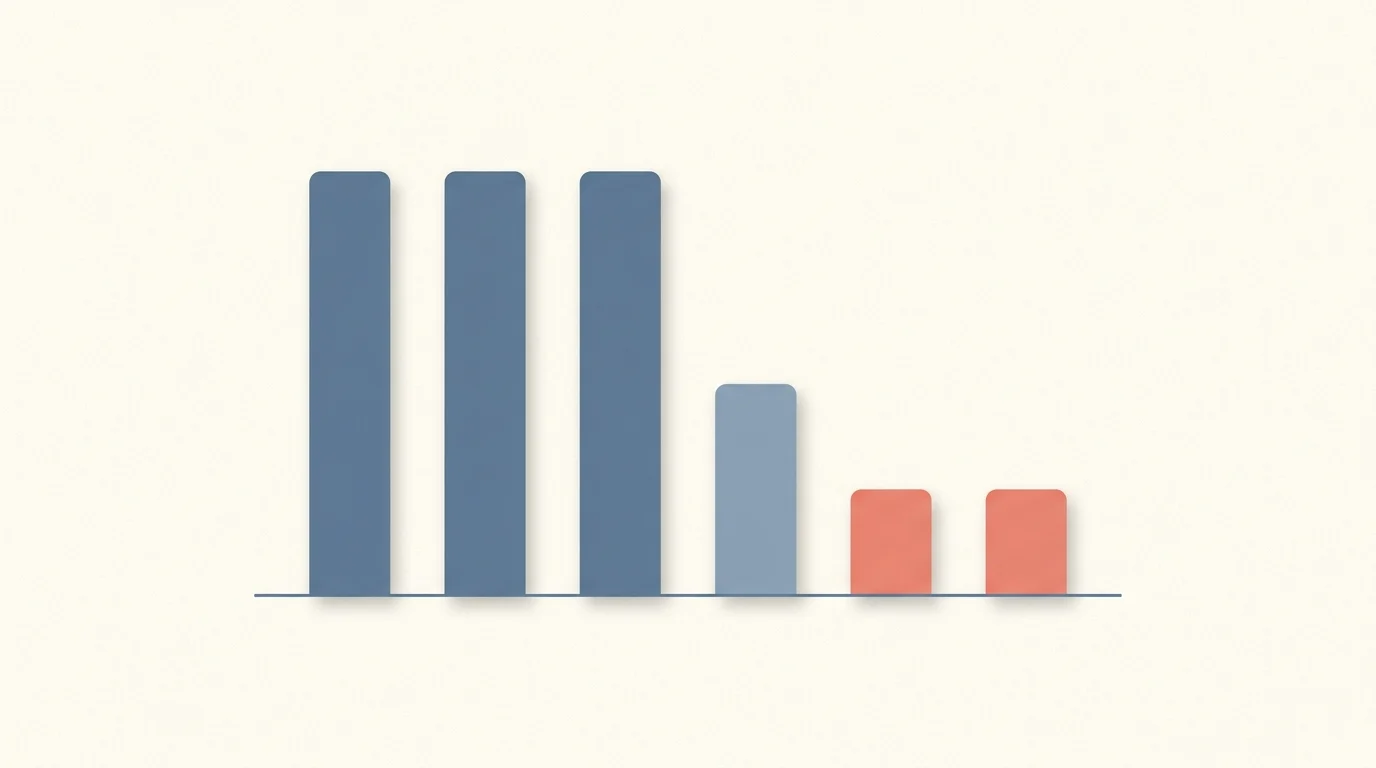
Across our 30 shopping prompts on 12 August 2026, an AI Overview was returned for 16 of them, or 53.3%. The split by vertical is the interesting part:
| vertical | AI Overview returned |
|---|---|
| supplements | 4 of 5 |
| skincare | 4 of 5 |
| pet | 4 of 5 |
| coffee | 2 of 5 |
| footwear | 1 of 5 |
| home office | 1 of 5 |
Health-adjacent categories get an overview almost always. Footwear and desk gear mostly do not. If you sell running shoes, the surface you were told to optimise for did not appear for four of our five questions, while your competitors in supplements are dealing with it constantly. That is worth knowing before anyone sells you a Google-first plan, and it is a different question from whether you can track the overviews at all.
How often do AI shopping answers change?
AI shopping answers change a lot on ChatGPT and almost not at all on Perplexity.
We ran each of the 30 prompts three times on 12 August 2026, roughly 20 minutes apart, and compared the cited domains between consecutive runs.
| engine | consecutive runs where sources changed | mean overlap |
|---|---|---|
| ChatGPT | 93.3% | 0.291 |
| Gemini | 87.9% | 0.427 |
| Perplexity | 26.7% | 0.778 |
Twenty minutes is a short gap, and ChatGPT still returned a different set of sources on 93.3% of consecutive runs. Perplexity changed on 26.7%. If you check your citations once on ChatGPT and act on what you see, you are acting on a snapshot that will not survive the afternoon.
We are not going to compare these against the churn figures in our earlier work on rerunning prompts, even though it is tempting. Those runs were 24 hours apart and these are 20 minutes apart, so the interval differs along with the category and the two numbers cannot be set against each other honestly. What does survive is the ordering: Perplexity was the most stable engine there too.
Google AI Overviews is missing from that table on purpose. Its results are cached for six hours, and all three of our runs finished inside an hour, so runs two and three are replays of the first. Reporting them would have produced a headline of "AI Overviews is perfectly stable", which is an artefact of a cache rather than a fact about Google.
What should an ecommerce brand actually do?
An ecommerce brand should stop optimising the product page for AI answers and start counting where citations actually land.
The first move is the same one we recommend to everyone and it costs an afternoon: take the questions your buyers actually ask, run each several times across the engines that matter to you, and write down which ones never mention you. On GetIntel's own tracked set - a separate corpus of 60 prompts about AI-visibility tooling, not the 30 shopping prompts measured here - that exercise found 36 questions with no mention at all, and the ones that mention you rarely are easy to mistake for wins.
The second move follows from the table above. If 95.71% of the citations on your category's questions sit with publishers, review sites and professional bodies rather than with shops, then the realistic path into the answer is being in their round-ups, and that is a pitching and product-seeding problem rather than an on-site one. It is closer to old-fashioned PR than to SEO. We have written about where citations sit and what that implies for a small team, and the ecommerce version of that conclusion is sharper, because the gap between where you publish and where you get cited is wider.
What we would not do is buy a tool on the strength of this article, including ours. Run the questions by hand first. A tracker earns its money when checking by hand becomes the thing you stop doing.
What this does not show
It does not show that being cited sells anything. We measured which domains the engines cite, not whether a citation moves a purchase, and we have no ecommerce conversion data of any kind.
Thirty prompts across six verticals is a small sample, and the verticals were our choice. A category we did not test, like electronics or fashion resale, could easily sit differently, and the AI Overview firing rate in particular varied enough between our own six that a seventh would be a genuine unknown.
The retailer classification is editorial. We counted 22 domains as retailers or marketplaces and published the list, but a specialist shop like Fleet Feet sits in the publisher bucket because its cited pages are buying guides. Move Fleet Feet's 25 citations into the retailer bucket and the share goes from 1.41% to 2.33%, which is a large relative jump and still nowhere near enough to change the conclusion.
And this is one day. Prices, products and round-ups all turn over, and the specific domains above will not be the same ones in six months.