GetIntel and Otterly.AI both start at $29/month and both refresh daily, so the two things people usually compare them on are level. The real differences are prompt volume and what each does after it finds a gap: at $29 GetIntel tracks 25 buyer prompts to Otterly Lite's 15, and where Otterly returns recommendations, GetIntel drafts the artifact and ships it through your own coding agent for review.
Disclosure: GetIntel publishes this comparison and sells one of the two products in it. Otterly's figures below come from its own pricing and features pages; weigh ours accordingly.
In this article
- Is GetIntel cheaper than Otterly.AI?
- How many prompts does each one actually track?
- Which AI engines does each cover?
- How often does each refresh?
- What does each hand you after the diagnosis?
- What does Otterly do better?
- Which one fits your team
Is GetIntel cheaper than Otterly.AI?
GetIntel is not cheaper than Otterly.AI at entry: both start at $29/month, and any comparison claiming otherwise is working from stale figures. Otterly's own pricing page, re-read on 23 September 2026, still lists Lite at $29, Standard at $189 and Premium at $489, and the full tier breakdown including prompt allowances, engine add-ons and the Enterprise floor is in Otterly.AI pricing 2026, with a discount for annual billing and a custom Enterprise tier. GetIntel is $29 Monitor, $79 Pro, $149 Growth.
Price only separates them in the middle of the range. Otterly's next step up from Lite is $189; GetIntel's is $79. That gap matters more than the entry price, because the entry tiers on both products are small enough that most teams outgrow them.
How many prompts does each one actually track?
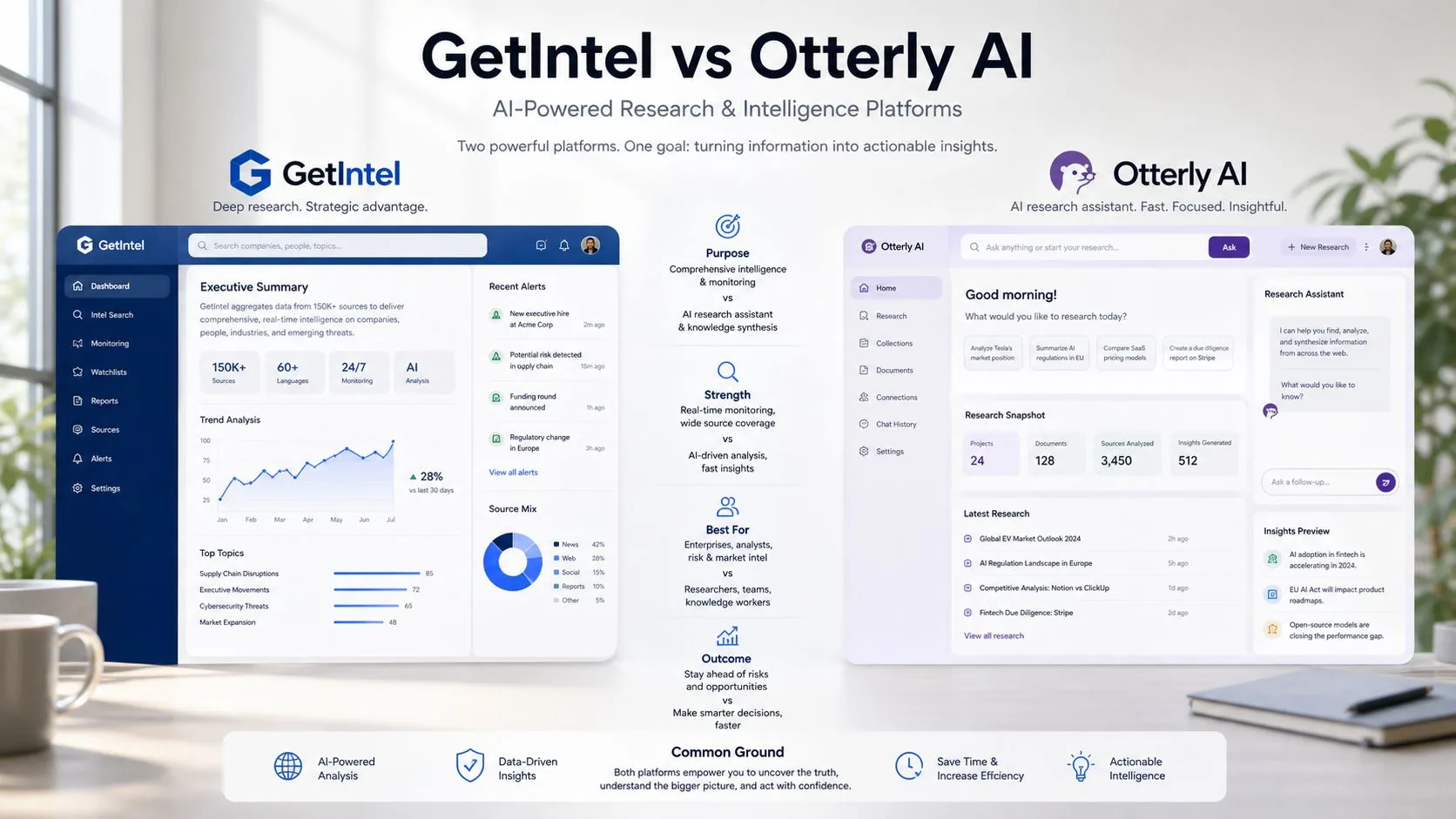
GetIntel tracks two-thirds more at the same price. Otterly Lite covers 15 prompts for $29. GetIntel Monitor covers 25 for the same $29.
| GetIntel | Otterly.AI | |
|---|---|---|
| Entry | $29, 25 prompts | $29, 15 prompts |
| Mid | $79, 60 prompts | $189, 100 prompts |
| Upper | $149, 120 prompts | $489, 400 prompts |
The shape of that table is the honest version of "GetIntel is cheaper." It isn't cheaper to start. It is cheaper per tracked prompt until you need more than about 120, at which point Otterly's Premium tier covers volumes GetIntel does not sell at all.
Prompt count is the number worth arguing about, because it decides how much of your category you can actually watch. Fifteen prompts covers one product's core buying questions. It does not cover a category.
Which AI engines does each cover?
Otterly covers four on every tier and sells three more as add-ons; GetIntel covers five, with Claude on the Growth plan.
Otterly's four core engines are ChatGPT, Google AI Overviews, Perplexity and Microsoft Copilot, included on Lite, Standard and Premium alike. Claude, Google Gemini and Google AI Mode are paid add-ons on top.
GetIntel covers ChatGPT, Perplexity, Gemini and Google AI Overviews, with Claude added on the $149 Growth plan.
The lists overlap on three: ChatGPT, Perplexity and Google AI Overviews. Otterly reaches Microsoft Copilot, which GetIntel does not track. GetIntel includes Gemini in the base set, which Otterly charges extra for. Neither list is strictly better. They answer to different assumptions about where buyers ask questions, and the right one depends on whether your market lives in Microsoft's stack or Google's.
How often does each refresh?
Both run daily. Otterly's pricing page lists daily tracking frequency on Lite, Standard and Premium, and its features page describes tracking visibility, sentiment and citations daily. GetIntel probes daily on every paid plan.
There is no weekly tier on either side. Cadence is settled, then. If you are reading a comparison that leans on daily-versus-weekly between these two, it is out of date.
What does each hand you after the diagnosis?
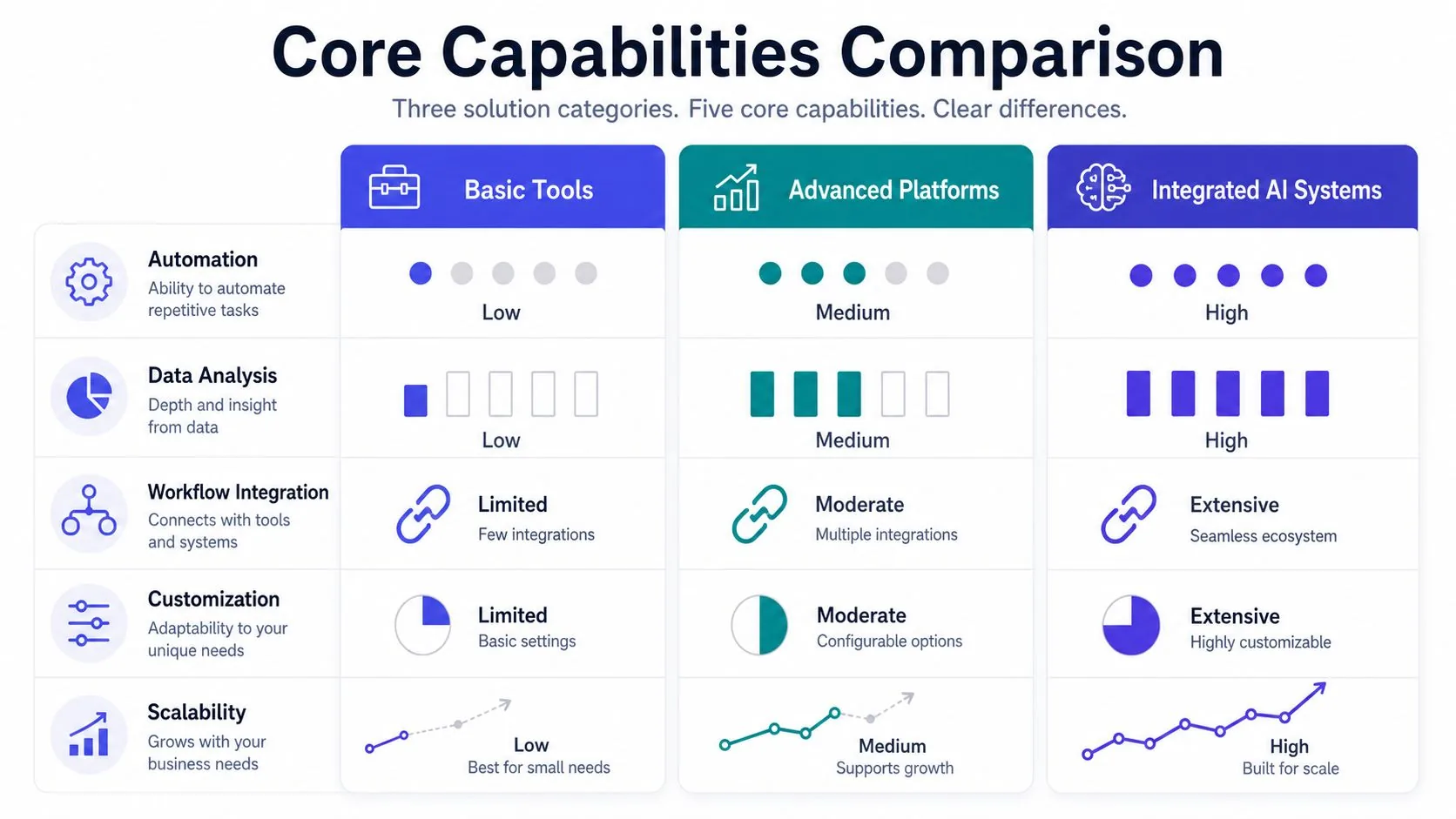
Otterly hands you recommendations; GetIntel hands you a draft and a way to ship it. This is the difference that survives every other correction on this page.
Otterly ships Content Audit, GEO Optimization and Recommendations alongside its monitoring (specific suggested improvements, capped at three a week on Lite and unlimited on Standard and Premium), plus API and MCP access on Standard and Premium. Read on 23 September 2026, its pricing page also now carries Agent Analytics and ChatGPT Ads Tracking on every tier, and its MCP server ships with a Claude Skill, connects over streamable HTTP with OAuth, and exposes brand reports, prompts, citations, GEO audits, recommendations and workspace management as callable tools.
GetIntel generates the artifact itself: llms.txt entries, Schema.org and Wikidata markup, counter-article briefs and outreach emails, tied to the specific gaps found. Those move through Claude Code or Cursor as a reviewable diff, with optional publishing to WordPress, Ghost or Webflow. Nothing ships without approval.
The honest framing is a spectrum rather than a binary. Otterly tells you what to change; GetIntel writes a first version of the change. Whether that is worth anything depends entirely on whether your team would otherwise have written it: a rough draft beats a blank page, and loses to a good writer with time.
What does Otterly do better?
Multi-country coverage, sentiment, and raw scale at the top end. Three things, and they are not small.
Otterly tracks across 50+ countries, which GetIntel does not match, and that is decisive if you sell into several markets and need to know whether your visibility differs by geography. It also runs brand sentiment analysis, measuring how you are described rather than only whether you appear. And its Premium tier covers 400 prompts against GetIntel's ceiling of 120. If you need to watch a category at that resolution, GetIntel does not sell a plan that does it.
Otterly also offers workspace management for running several client brands in isolation, so the agency case is covered on both sides rather than being a GetIntel-only feature.
Which one fits your team
Pick on prompt volume and output, because price and cadence are level.
Choose Otterly if you sell into multiple countries, if sentiment matters as much as presence, or if you need to track more than 120 prompts. Its $189 Standard tier buys 100 prompts and unlimited recommendations, and its multi-country coverage has no GetIntel equivalent.
Choose GetIntel if you are watching one or two products, want the most prompts per dollar at the low end, and the thing that stalls your work is turning a finding into published output. Twenty-five prompts at $29 and 120 at $149 is the strongest part of the case, and the drafted-fix workflow is the rest of it.
The practical test costs nothing but time: put the same twenty buyer questions into both for a month and judge on what got published as a result. On entry price and refresh cadence you will find no difference, which is exactly why those are the wrong things to choose on. You can start free if you want to run that test.
For a wider comparison against the incumbent SEO suites rather than a direct peer, the GetIntel vs Semrush breakdown covers the same ground, and our AI visibility tracking goes deeper on how the probes themselves work.
For the same comparison against other tools in this category: GetIntel vs Profound. For the shorter, positioning-focused version of this comparison, see Otterly alternatives.