Profound is sales-gated again. It briefly published two self-serve tiers, Starter at $99/month and Growth at $399/month, and has since withdrawn both: as of 17 September 2026 its pricing page shows only a free trial and a custom Enterprise plan. GetIntel's $149 Growth plan covers five engines and 120 prompts on a credit card. Profound's real advantage sits at the Enterprise tier, where it reaches up to nine engines that nobody else matches, and that is now the only tier it sells.
Disclosure: GetIntel publishes this comparison and sells one of the two products in it. Profound's self-serve figures below were read from its own pricing page in August 2026 and are kept as a record of tiers it no longer offers, re-checked against the live page on 17 September 2026.
In this article
- Is Profound enterprise-only?
- What does Profound cost?
- Which AI engines does each one track?
- What is Profound genuinely better at?
- What does GetIntel do differently?
- Who each tool is really for
Is Profound enterprise-only?
Profound is enterprise-only again. This page previously said no, because for part of 2026 Profound did publish Starter at $99/month and Growth at $399/month as self-serve tiers. Both are gone. Its pricing page now offers a free trial (limited credits, 10 prompts run once, ChatGPT only) and Enterprise at custom pricing, with nothing in between. The tier breakdown we captured while the self-serve plans existed is kept in Profound pricing 2026.
The round trip is the useful part. "Enterprise-only, talk to sales" described Profound for most of 2025, stopped being true for a stretch of 2026, and is true again. A team with $99 a month could buy Profound without a procurement cycle for part of this year and cannot now. If you are comparing tools today, budget for a sales call.
What does Profound cost?
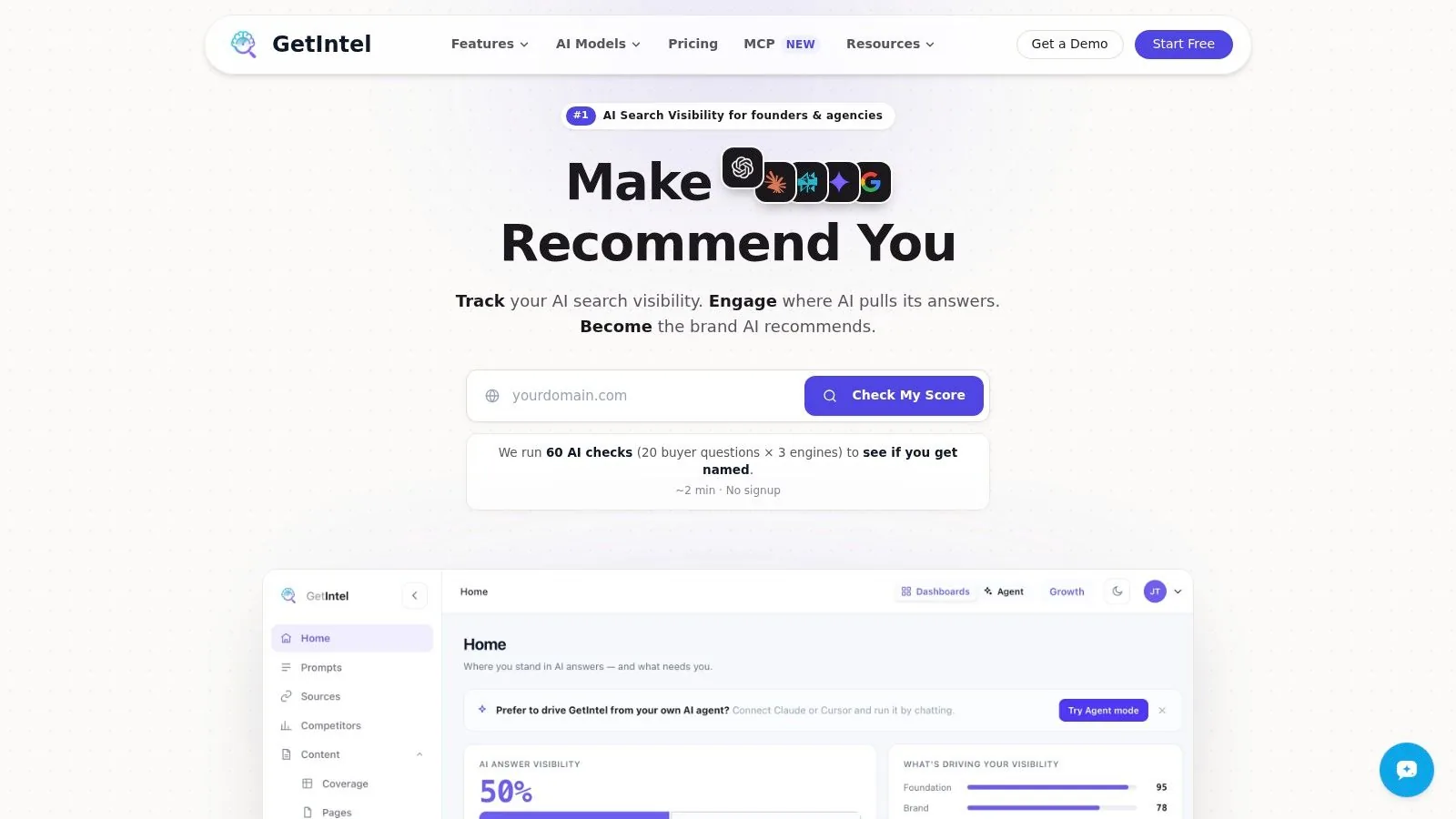
Profound costs whatever a sales call quotes, since it publishes no self-serve price. The figures below are the tiers as published in August 2026, $99/month for Starter and $399/month for Growth, both billed yearly. Neither is purchasable now, and they are kept here because the shape of what each tier bought is still the clearest guide to how Profound packages coverage. What separates them is engine count and prompt volume, not features in the abstract.
| Profound | GetIntel | |
|---|---|---|
| Entry | $99, ChatGPT only, 50 prompts | $29, 4 engines, 25 prompts |
| Mid | $399, 3 engines, 100 prompts | $79, 4 engines, 60 prompts |
| Upper self-serve | Not offered | $149, 5 engines incl. Claude, 120 prompts |
| Enterprise | Custom, up to 9 engines | not offered |
The line worth sitting with is the first one. Profound's entry tier was $99; GetIntel's top self-serve tier is $149. At that price Profound tracked one engine and 50 prompts; GetIntel tracks five and 120.
That is not a claim that Profound was overpriced. It is a different product shape. Profound's self-serve tiers read as an on-ramp to Enterprise rather than as the product, and withdrawing them settled the question: Enterprise is where its capability actually lives, and now it is the only thing on sale.
Which AI engines does each one track?
Profound reached one engine on its old $99 tier and three on the $399, and reaches up to nine on Enterprise. GetIntel covers four on every paid plan, with Claude as a fifth on Growth.
The full Enterprise set is ChatGPT, Perplexity, Google AI Mode, Gemini, Microsoft Copilot, Grok, DeepSeek, Claude and Google AI Overviews. Starter covers ChatGPT alone. Growth covers three.
GetIntel covers ChatGPT, Perplexity, Gemini and Google AI Overviews on every plan, adding Claude on Growth.
So the honest engine comparison depends entirely on which Profound tier you mean. Against Enterprise, Profound covers surfaces GetIntel does not touch, Grok, DeepSeek, Copilot, Google AI Mode. Against Monitor or Growth, GetIntel covers more engines for less money. Any comparison quoting Profound's nine-engine breadth next to a self-serve price is comparing two different products.
What is Profound genuinely better at?
Profound is genuinely better at engine breadth, at scale, and at being the category's most established player. Three real advantages.
Nine answer engines is more than anyone else offers, and if your buyers ask questions in Copilot or Grok or DeepSeek, Profound is one of very few products that will tell you what happens there. It also tracks multiple companies under one account at Enterprise, supports larger teams, and has the funding and customer base that make it a safe procurement choice, which matters more than feature lists when someone else signs off the spend.
Its Agents credits model and integration list (Akamai, AWS, Cloudflare, Fastly, Vercel, WordPress and others) are built for organisations with real infrastructure, not for a founder running marketing on the side.
What does GetIntel do differently?
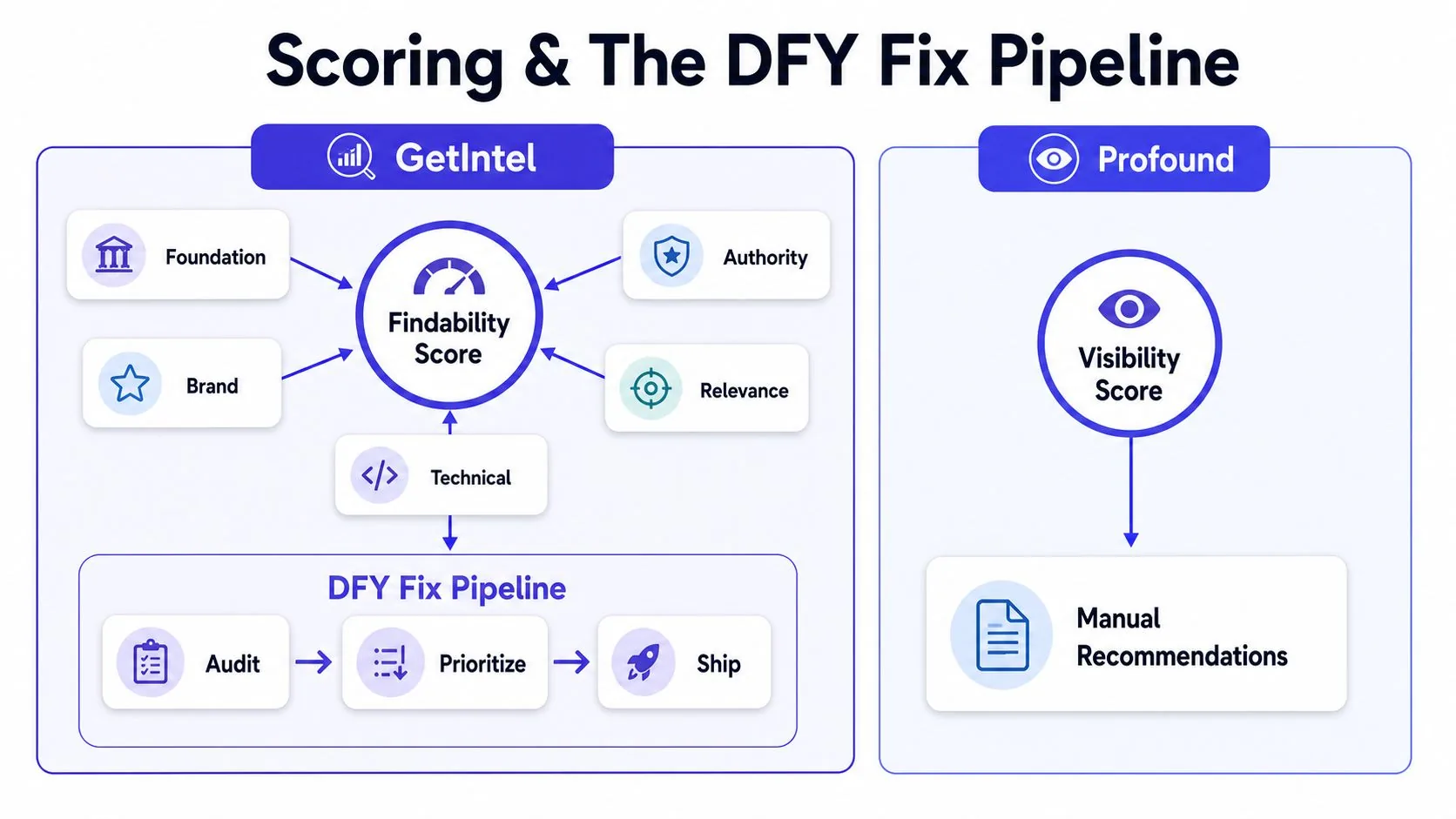
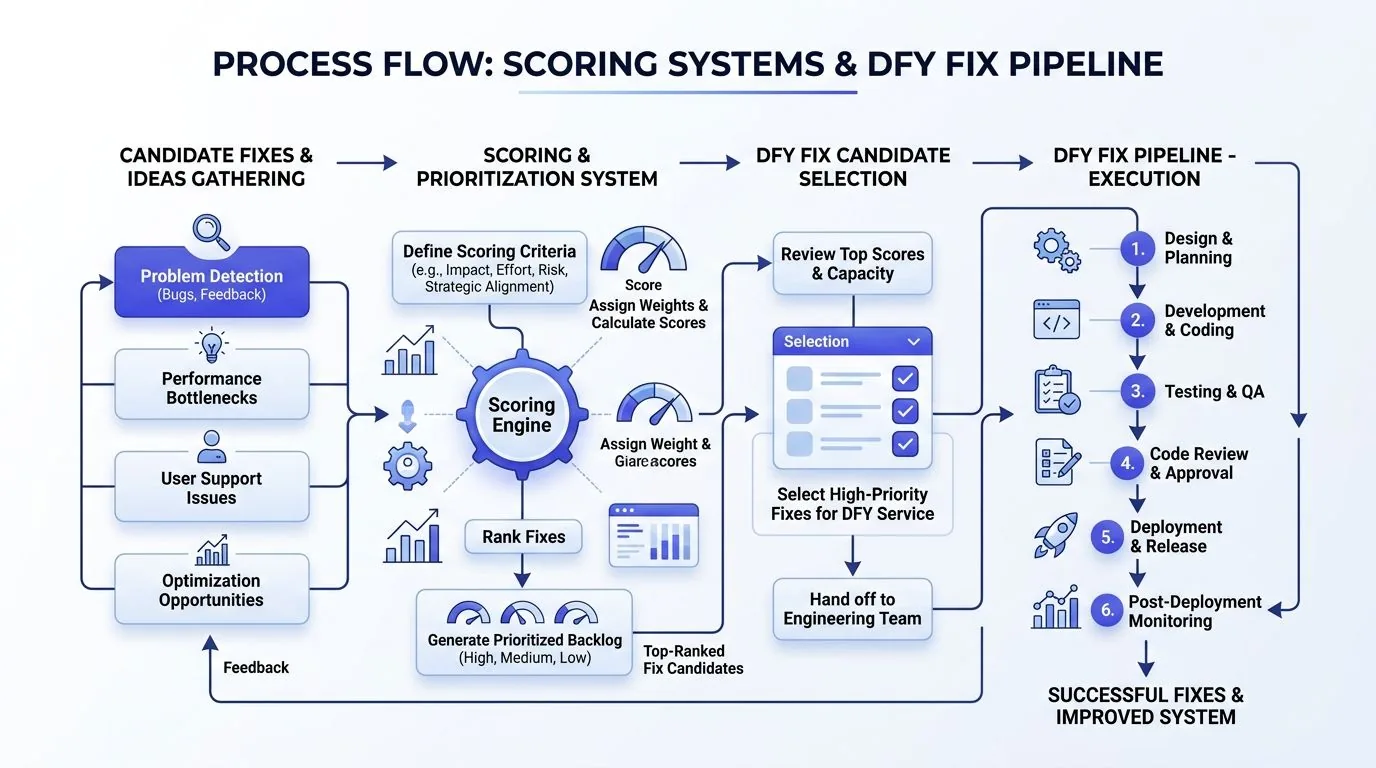
GetIntel drafts the fix rather than stopping at the measurement. llms.txt entries, Schema.org and Wikidata markup, counter-article briefs and outreach emails, generated against the specific gaps found and shipped through Claude Code or Cursor as a reviewable diff, with optional publishing to WordPress, Ghost or Webflow.
Two honest caveats. A generated draft is a starting object, not a finished asset: a team with a good writer and spare time does better without it. And we have not run a controlled side-by-side test against Profound. Any figure presented as a head-to-head between these two products should be treated with suspicion, including from us. This comparison rests on each product's published pricing and capabilities, nothing more.
Who each tool is really for
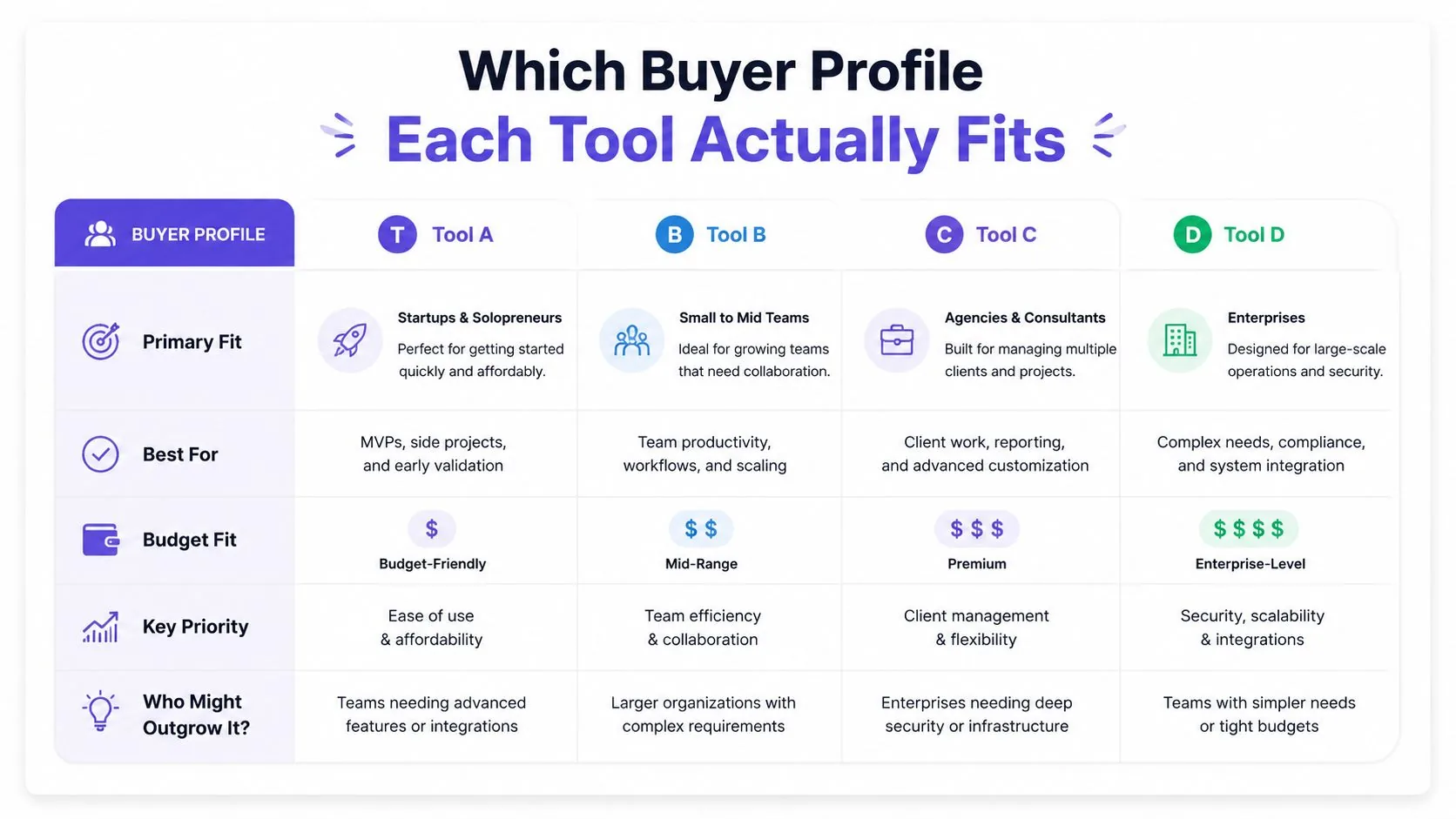
Choose between GetIntel and Profound on which engines you need and who is paying.
Choose Profound if you need coverage beyond the four big surfaces (Copilot, Grok, DeepSeek, Google AI Mode), if you are tracking several companies, or if you are buying through procurement where an established vendor with an enterprise contract is the safer choice. Its Enterprise tier does things nothing in this comparison matches.
Choose GetIntel if you are one team watching one or two products, want more than one engine at the price Profound charges for ChatGPT alone, and the thing that stalls your work is turning a finding into published output.
Look at neither yet if you have not established which engines your buyers actually use. That answer changes the recommendation more than any feature on this page, and it is free to find out. Take your twenty most important buyer questions and check them by hand across each surface first.
You can start free to run that test, and our AI visibility tracking explains how the probes work. For the same comparison against an SEO suite rather than a dedicated competitor, see GetIntel vs Semrush.
For the same comparison against other tools in this category: GetIntel vs Ahrefs Brand Radar. For the shorter, positioning-focused version of this comparison, see GetIntel as a Profound alternative.