GetIntel stores the full list of sources an AI engine cited for every buyer question, on every run, from $29/month across ChatGPT, Perplexity, Gemini and Google AI Overviews. Otterly.AI and Peec AI are the strongest alternatives for citation detail; Ahrefs is the one to use if you already pay for it. Every price below was read from the vendor's own page on the date given in its row, between 26 August and 24 September 2026.
Disclosure: we make GetIntel, and it is included and described on the same criteria as the other nine. It also appears first, and we measured how common that is: 16 of 17 vendor roundups rank themselves first. Read the order as a vendor's order, not an independent verdict.
What is AI citation tracking?
AI citation tracking records which sources an AI engine used to build its answer: the pages and domains it cited, per buyer question, per engine, per run. It is a narrower job than AI visibility tracking, and the difference is worth holding onto.
A mention is the engine naming your brand in the text of its answer. A citation is the engine pointing at a page as a source for what it said. The two come apart constantly. You can be named without any of your pages being cited, and your page can be cited in an answer that recommends a competitor.
Citations are the part you can act on. To be named in an answer you usually have to be in the sources the engine read first, and those sources vary far more than most teams expect. Across 491 AI answers citing 1,283 distinct domains on five engines, measured 2 August 2026, no engine's source set looked like another's. On our 2026-08-11 run, Gemini and ChatGPT agreed on only 4.5% of the domains they cited for the same prompts.
Tools do this the only way it can be done from outside: they ask a fixed set of buyer questions on the live engines, capture the answer text and its citations, and repeat on a schedule. The schedule matters more than it sounds. ChatGPT returned a different source set on 93.3% of consecutive runs twenty minutes apart in our own measurement, so a single check is a snapshot, not a reading. For a one-off look at your own site, the free AI citation checker runs one in a couple of minutes.
How the 10 tools compare
Ten tools that keep the cited sources rather than a count. They separate on engine coverage, price, how detailed the citation data is, and whether they do anything with it.
| Tool | Engines | Starting price | Citation-level data? | Fix workflow | Best for |
|---|---|---|---|---|---|
| GetIntel | ChatGPT, Perplexity, Gemini, Google AI Overviews daily; Claude weekly on Growth | $29/mo, read 17 Sep 2026 | Yes, every cited URL per question and engine | Yes, from Pro ($79) | Founders and small teams who want the sources and the fix |
| Otterly.AI | 4 base; Claude, Gemini and Google AI Mode as paid add-ons | $29/mo Lite, read 19 Sep 2026 | Yes, link citation analysis, readable over MCP | Not stated | Teams that want citation rows an agent can read |
| Peec AI | 3 chosen from 6 | $95/mo Starter, read 17 Sep 2026 | Yes, sources split by engine | Not stated | Per-engine source detail |
| LLM Pulse | 5 surfaces at entry | 49 euros/mo, read 23 Sep 2026 | Yes, five surfaces | Partial, 3 writing tasks a month on Starter | Wide coverage on a budget |
| Siftly | 2 free, 3 on Starter, 4 at the top | $0 free, $79 Starter, read 17 Sep 2026 | Yes | Partial, citation outreach campaigns | Acting on the list, not just reading it |
| Ahrefs Brand Radar | 6 indexed platforms | Own prompts from $199/mo, read 24 Sep 2026 | Yes, via API endpoints | No | Existing Ahrefs users |
| Semrush AI Visibility Toolkit | 4 | $99/mo per domain, billed annually, read 27 Aug 2026 | Yes, a Cited Sources tab | No drafted fixes | Semrush users buying it as its own product |
| SE Ranking | 5, including Google AI Mode | $129/mo Core, or an $89 add-on, read 17 Sep 2026 | Aggregate, sites ranked by how often they are used | Not stated | Existing SE Ranking users |
| Profound | Up to 9 on Enterprise | No published price, tiers withdrawn, confirmed 17 Sep 2026 | Yes, six source categories plus Watched Pages | Agents layer, Enterprise only | Enterprise teams through procurement |
| Rankscale | 10 named of a claimed 17 | $99/mo Pro, read 23 Sep 2026 | Yes, Citations and Sources as separate sections | Partial, page audits | The widest engine coverage |
"Not stated" means the vendor's own pricing and product pages do not describe drafting or shipping a fix, not that we tested and found none.
Which tools do the engines name for this question?
Which tools the engines name and which tools ship the feature are two different claims, and this page keeps them apart. The table above is about what each tool stores. This section is about who the engines point to when somebody asks.
We ran three citation-tracking questions across ChatGPT, Perplexity, Gemini and Google AI Overviews on 12 August 2026, twice each, and counted the domains the engines cited: 209 citations across 78 domains, published in the dataset under citation_tracking_subset. The engines mostly answer with small tools: atlasworkspace.ai on 13 citations, Ahrefs on 12, LLM Pulse on 11, Siftly on 11, an independent blog on 9, and Otterly.AI on 7. Profound and Peec AI, first and third on the broader AI-visibility question, do not reach the top ten on this one.
We are not in that top ten either. That ranking tracks how long and how much a company has published about the category, so it favours whoever wrote about it first rather than whoever built the better tool. It is why the list of ten is not simply the cited list.
1. GetIntel, from $29 a month
GetIntel stores every cited URL from every run, per buyer question and per engine, with the answer text beside it so you can see why a competitor was named. It covers ChatGPT, Perplexity, Gemini and Google AI Overviews daily, with Claude weekly on Growth. Monitor is $29 for 25 buyer questions, Pro $79 for 60 and Growth $149 for 120, billed monthly, read 17 September 2026. From Pro, each gap becomes a ranked task with a drafted fix that ships through Claude Code or Cursor over MCP, with your approval on every change.
Best for: founders and small teams who want the source list and the fix in one place.
Weakness: Monitor at $29 is monitoring only, with no fix workflow, and Claude is weekly and only on Growth.
2. Otterly.AI, from $29 a month
Otterly.AI keeps the list rather than a count: link citation analysis is a named metric, and its MCP server exposes citations, sources and raw responses to Claude, Cursor, n8n and Zapier, so the underlying rows are readable by an agent rather than trapped in a chart. Lite is $29 for 15 prompts, Standard $189 for 100, Premium $489 for 400, and Enterprise from $1,000, read 19 September 2026. Extra prompts are $99 per 100. Its documentation subdomain gets cited more than its marketing site on these questions, which usually means the docs answer real questions.
Best for: teams that want citation data an agent can query directly.
Weakness: Otterly advertises seven surfaces, but Claude, Gemini and Google AI Mode are paid add-ons on every tier, and there is nothing between $29 and $189.
3. Peec AI, from $95 a month
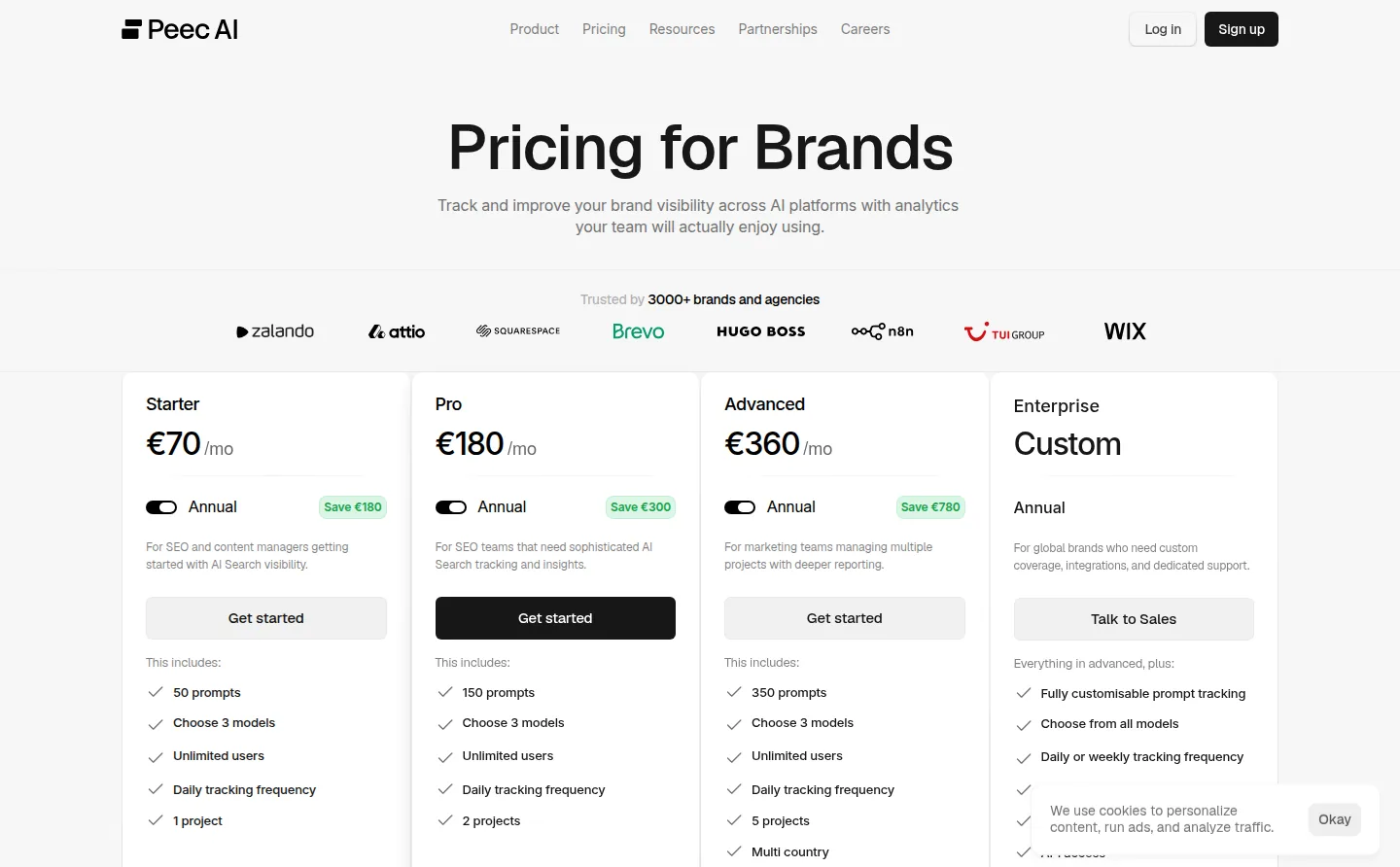
Peec AI is the one tool here that splits sources by engine on its own surface: ChatGPT sources, Google AI Mode citations and Gemini grounding sources are named separately rather than blended into one figure. That matters because two engines answering the same question rarely cite the same domains. Starter is $95 a month, Pro $245 and Advanced $495 on monthly billing, or $80, $205 and $420 billed annually, read 17 September 2026, and the annual default makes the headline price look lower than it is.
Best for: anyone who wants per-engine source detail as the default view.
Weakness: each plan covers three engines chosen from six, so full coverage means spending a choice on every surface you care about.
4. LLM Pulse, from 49 euros a month
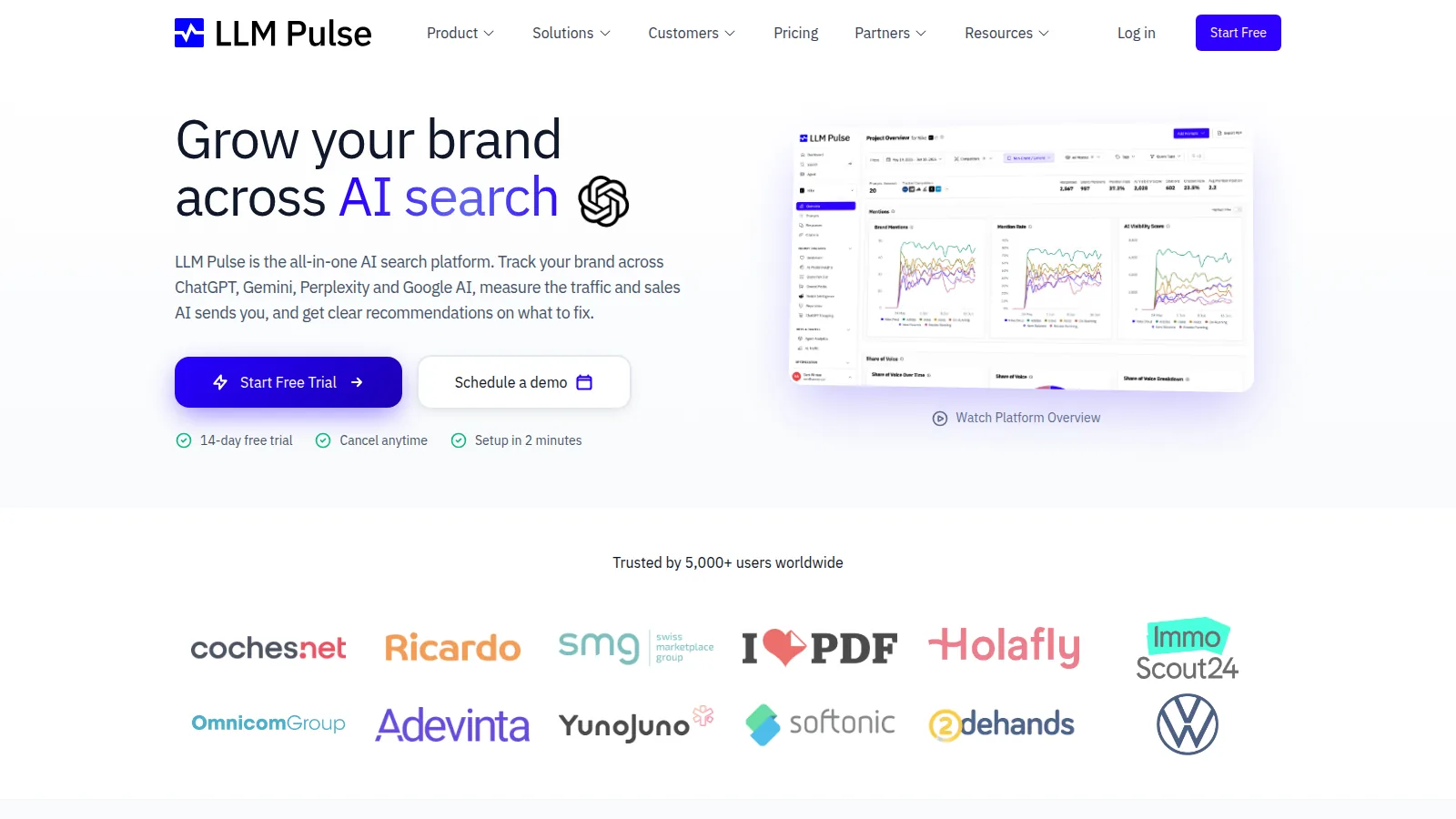
LLM Pulse covers several engines rather than specialising in one: ChatGPT, Perplexity, Gemini, Google AI Mode and Google AI Overviews, five surfaces at the entry tier. Pricing is public and granular, with five self-serve tiers in euros starting at Starter 49 euros a month, then Growth 99 and Scale 299, read 23 September 2026. It also carries a writing feature, three tasks a month on Starter, which is a small step past pure measurement. It is joint third among the domains the engines cite on these questions, with 11 citations.
Best for: the widest engine coverage at a low entry price.
Weakness: prompts refresh weekly, not daily. Sources churn faster than that, so a weekly reading shows a trend and cannot tie a change to something you shipped on a given day.
5. Siftly, free to start
Siftly is the only tool here that tries to act on the citation list rather than display it: citation outreach campaigns are a metered feature, five a month on the entry tier, aimed at the third-party pages doing the citing. It also logs AI crawler traffic and connects to Claude over MCP. The free tier is $0 for 100 responses a month, 10 prompts, weekly refresh and 2 engines. Starter is $79 for 4,500 responses, 50 prompts, daily refresh and 3 engines, and Growth is $249, read 17 September 2026.
Best for: teams that want outreach built on the citation list.
Weakness: we have not used it, so this entry is read from its own pages rather than tested.
6. Ahrefs Brand Radar, index included on paid plans
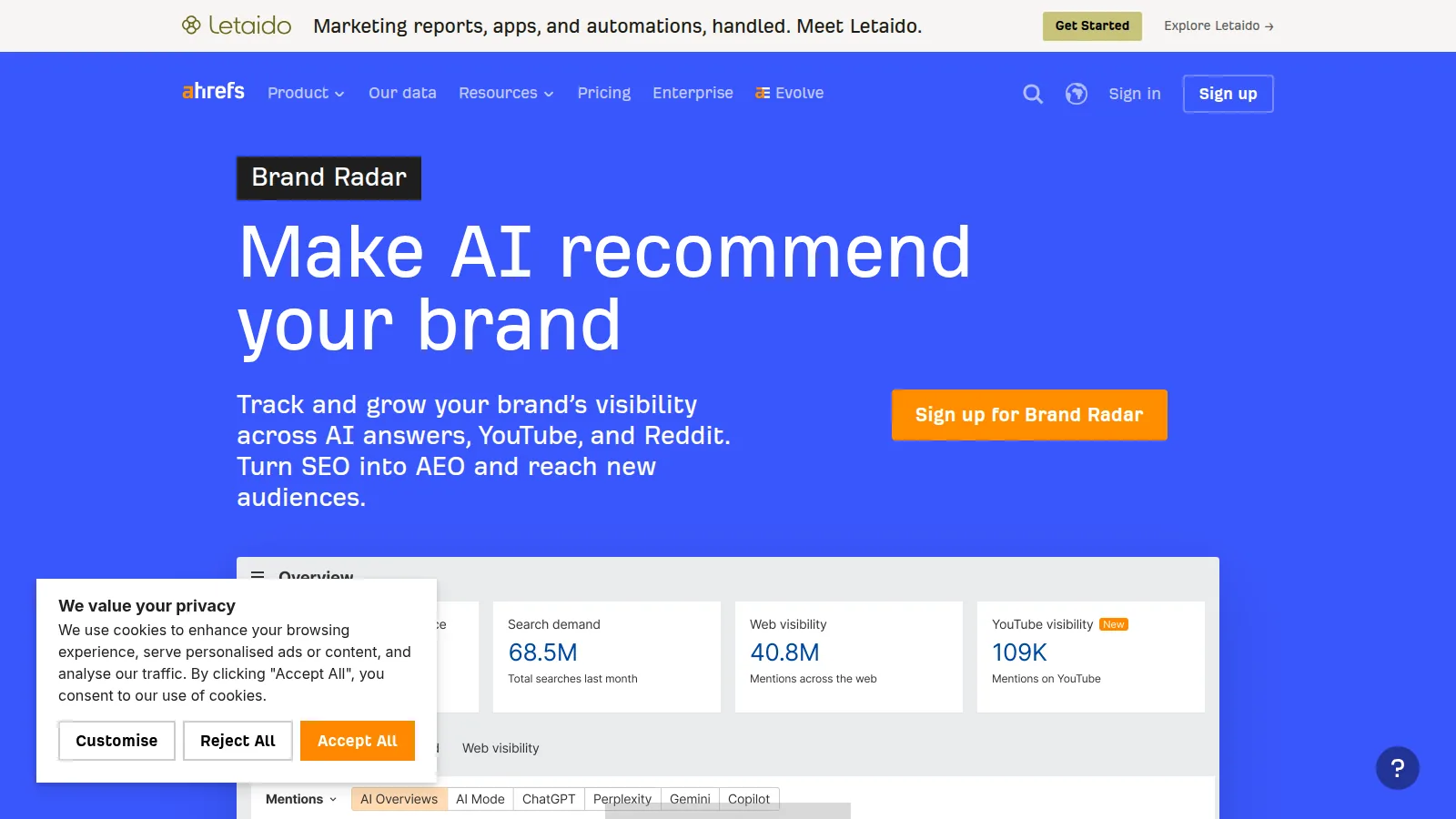
Ahrefs sells two things under the one Brand Radar name. The market-wide index, covering 451M monthly prompts across six platforms, is included on the Lite, Standard and Advanced plans from $129 a month. Tracking your own prompts is separate: from $199 a month for 83 prompts a day, with custom prompt packages at $50, $100 and $250, read from ahrefs.com/pricing on 24 September 2026. Its brand-radar-cited-pages and brand-radar-ai-responses endpoints return the list rather than a count, the most direct API answer to this question in the comparison. It is second among the domains the engines cite here, with 12.
Best for: existing Ahrefs users who want market-wide citation data over an API.
Weakness: configuring a report and licensing the add-on are separate purchases. On 2 August 2026 our own configured report returned Missing addon: Brand Radar on both endpoints. The full account is here.
7. Semrush AI Visibility Toolkit, $99 a month per domain
Semrush keeps its citation data in a Cited Sources tab inside the AI Visibility Toolkit's Overview. The toolkit is a standalone product with its own checkout at $99 a month per domain, billed annually, read 27 August 2026, so an existing Semrush plan does not include it. The base covers one domain, 25 tracked prompts and four engines. The full breakdown is here.
Best for: Semrush users who want citation data without leaving the suite's interface.
Weakness: it is a separate annual purchase on top of Semrush, and it stops at reporting with no drafted fixes.
8. SE Ranking, from $129 a month
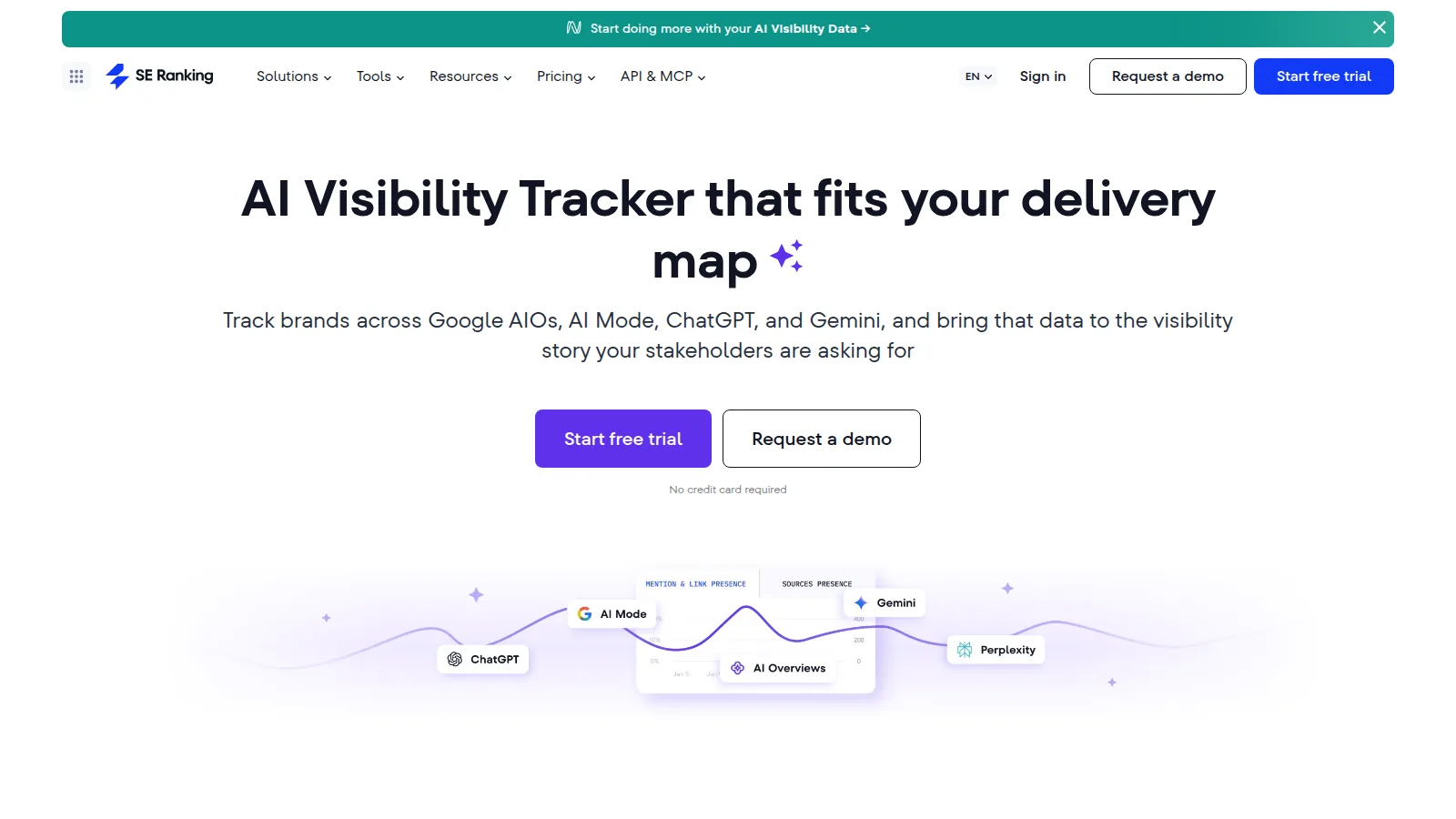
SE Ranking presents cited sources as a ranked list of the sites the engines use most, which is the aggregate view rather than the per-question one. Prompt tracking is bundled into the SEO platform, $129 a month on Core with 100 prompts, and there is a separate AI Search add-on at $89, read 17 September 2026. It covers ChatGPT, Perplexity, Gemini, Google AI Overviews and Google AI Mode.
Best for: teams already on SE Ranking who want citations next to their rankings.
Weakness: the aggregate view tells you which sites win overall, not which source an engine used on a given question, and what the add-on adds is unclear from its own page.
9. Profound, enterprise only
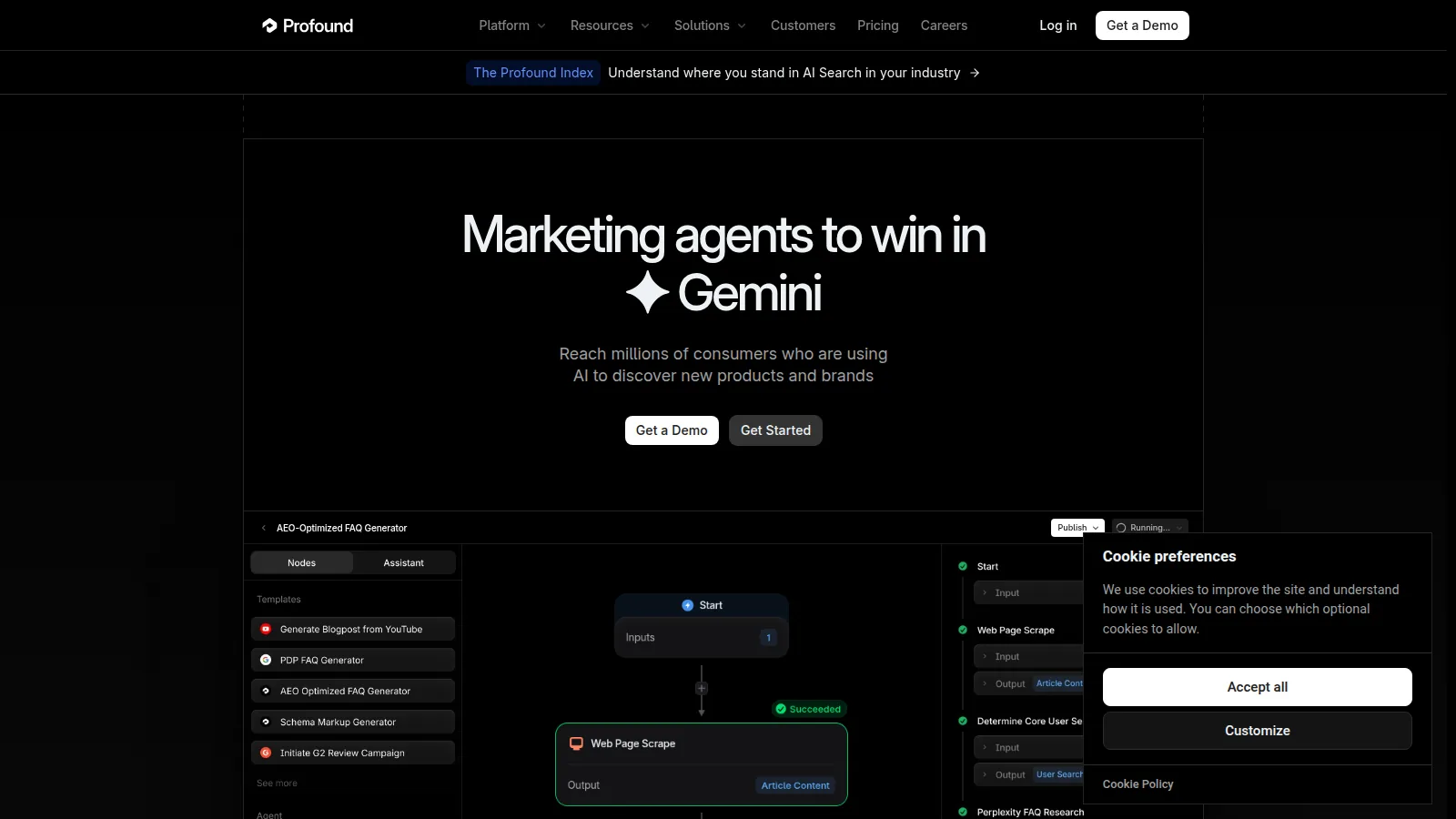
Profound has the widest citation surface of anything we have read. It splits cited sources into six categories rather than one flat list, and Watched Pages follows named URLs of your own over time, the closest thing in this category to page-level attribution. It reaches up to nine engines on Enterprise and carries an Agents layer.
Best for: enterprise teams buying through procurement who want the deepest citation data.
Weakness: there is no price to compare. Profound withdrew its $99 and $399 self-serve tiers in September 2026, confirmed against its live pricing page on 17 September, so the only route in is a sales call. What it withdrew is recorded here.
10. Rankscale, from $99 a month
Rankscale keeps Citations and Sources as two separate dashboard sections, and covers more engines than anything else here, naming ten of a claimed seventeen. Pro is $99 a month for 1,200 credits, up to about 4,800 tracked answers, 50 page audits and 10 brand dashboards, read 23 September 2026. It also lists an Essentials tier starting at $20 with no contents published, so that tier cannot be compared.
Best for: the widest engine coverage, including DeepSeek, Mistral, Grok and Copilot.
Weakness: it meters in credits, so how much you can check depends on how often you check it rather than on a fixed allowance. The credit arithmetic is worked through in GetIntel vs Rankscale.
What separates a real citation tracker from a dashboard?
A real citation tracker stores every cited URL rather than a count, and that is the one of its four jobs that is hard to fake.
- Does it store every cited URL, or a count? A number tells you that sources changed. The list tells you which ones, which is the only version you can act on.
- Is it per engine, or blended? Engines answering the same question cite almost entirely different domains, so a combined figure hides the only comparison that matters.
- Does it keep the raw answer text? When an engine cites a competitor, the answer text is the only place the reason is visible.
- How many runs sit behind each figure? Sources churn hard, so a single check is a snapshot rather than a reading.
Those last two points are why rerunning prompts matters more than adding engines, and why a two-engine tool sampled often beats a four-engine one sampled rarely. Perplexity is the easiest engine to audit by hand because it shows its sources inline; Perplexity brand tracking covers how to read them properly.
Do you need a tool for this at all?
You do not need a tool to start. Open ChatGPT, ask the questions your buyers ask, and write down the sources it cites underneath the answer. Repeat weekly. That is genuinely the same first insight a paid tool gives you, and it costs an afternoon.
If you need to make that case to someone holding the budget, we have written up how to justify it. Buy something when doing it by hand becomes the thing you stop doing, or when you need the history: the value of a tracker is not the single reading, it is having last month's readings to compare against, which you cannot reconstruct after the fact.
Where the citations actually go
The engines cite forums and publishers far more than vendor sites in this category, which is worth knowing before you optimise anything. Reddit and YouTube out-cite every vendor in this space, and on shopping questions retailers took 1.41% of citations while publishers took almost everything.
A citation tracker tells you which sources won. It does not get you into them. That part is a pitching and publishing problem, and only a few tools here, Siftly's outreach campaigns among them, try to help with it.
What this comparison does not do
This comparison does not rank product quality. We have used one of these tools, our own, and are reporting what each vendor publishes for the rest.
It lists ten tools, and one we covered previously is out. Scrunch AI groups citations with general monitoring rather than treating them as their own product area, and at $250 a month for Core, read 26 August 2026, it had the highest entry price and the least citation-specific detail of the eleven, so it made the least sense on a list about citations.
The citation ranking rests on three prompts and two runs. It is enough to show which vendors own this question and not enough to separate fourth place from seventh. Prices move in this category faster than roundups get refreshed, so check the date in each row before you quote one.